A pianist walks onto a stage, sits down, and carries an entire concert alone. Today, the arrangement hardly needs explaining. We buy a ticket for a piano recital and know what to expect.
In the early nineteenth century, that invitation could sound rather strange. Would one instrument provide enough variety? Could a single performer hold an audience without singers or other instrumentalists?
The story of how that gamble became a tradition leads to Franz Liszt, but it also takes us beyond him. It involves a new name, changing programs, and musicians who helped audiences hear the piano differently.
Before the recital, variety was the attraction
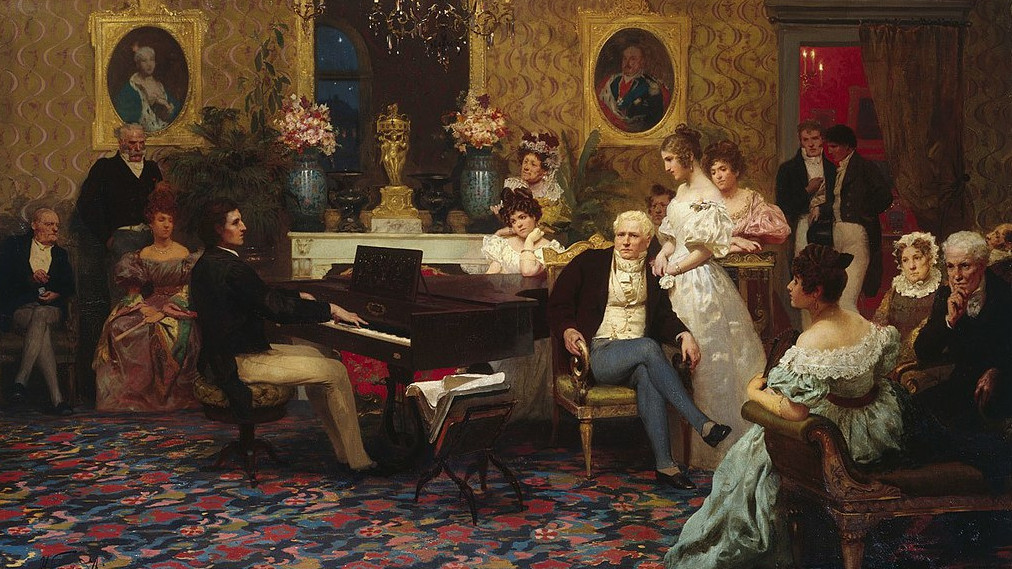
Early nineteenth-century public concerts commonly brought together singers and instrumentalists. A pianist might be the main attraction while sharing the program with several other performers. Changing voices, instruments, and musical genres gave listeners the contrast they expected.
As historians Janet Ritterman and William Weber explain, a program played entirely by one pianist departed from that established pattern. The solo recital grew alongside mixed concerts rather than immediately replacing them. Their study of concert programs shows a gradual, uneven change.
Try reversing our modern assumptions for a moment. If your favorite concert offered a succession of different performers, an afternoon with just one pianist might seem like a smaller offering. The performer would have to make that concentration feel like an opportunity.
London, June 9, 1840
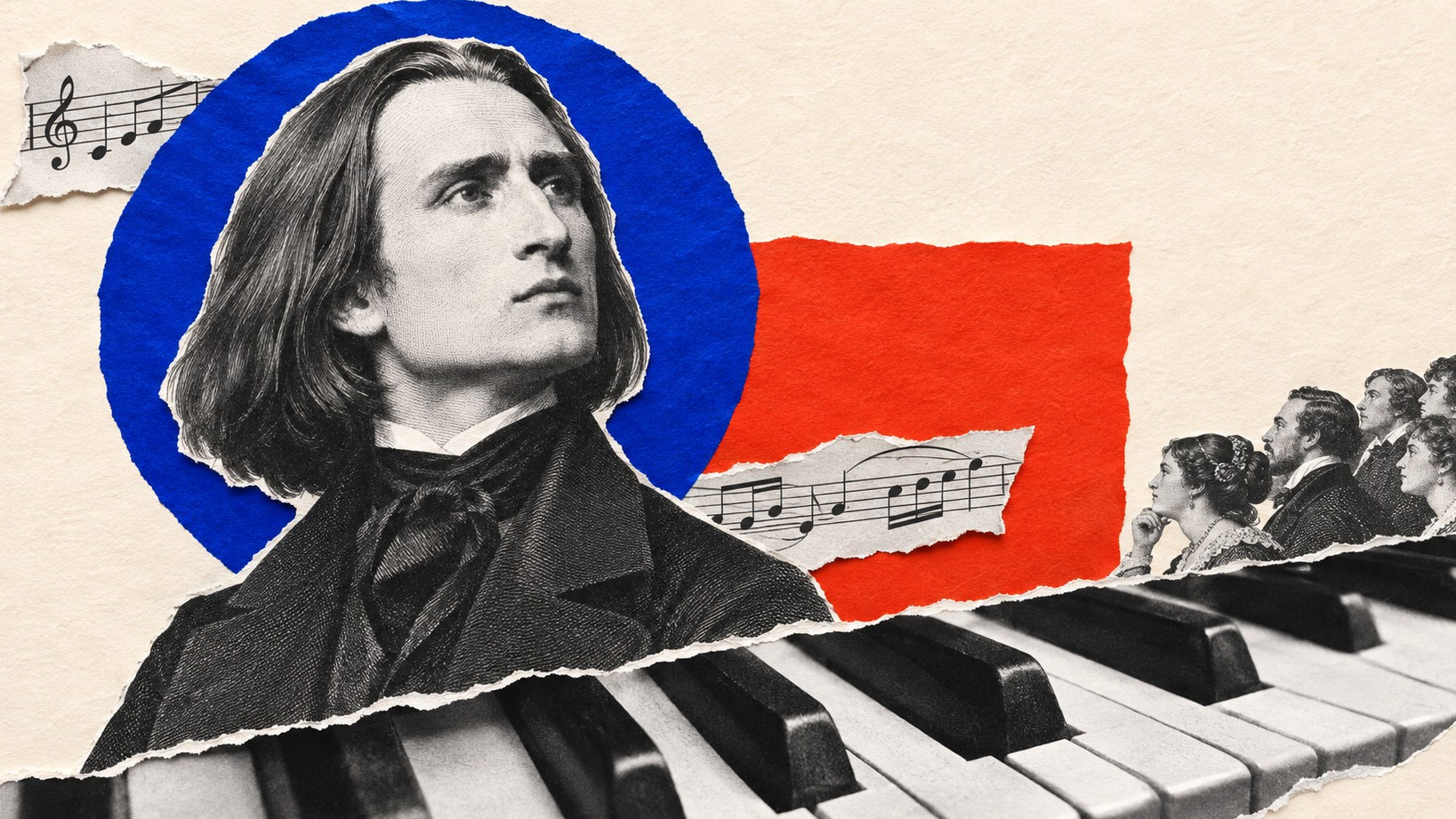
Liszt's appearance at the Hanover Square Rooms in London on June 9, 1840 became a landmark in that transformation. His London concerts introduced the piano recital to British audiences, although he had already performed solo programs elsewhere. The date matters without having to make it the first occasion on which anyone played a piano alone.
A revealing detail follows just twenty days later. At the Willis Rooms on June 29, Liszt also performed Beethoven's Kreutzer Sonata with the Norwegian violinist Ole Bull. The new idea still had room for a colleague. William Wright records both occasions in Liszt and England.
What did Liszt actually play?
Imagine an early recital and you might picture a row of Beethoven sonatas. The June 9 program offers a different picture.
It included Liszt's arrangements of music from Beethoven's Pastoral Symphony and Schubert's songs Ständchen and Ave Maria, alongside Hexaméron, a tarantella, and his Grand galop chromatique. Mark Mitchell lists these works in the opening of “The Circus,” a chapter of Virtuosi.
Consider the range of sounds suggested by those titles: an orchestra, a singing voice, dancing movement, a brilliant rush across the keyboard. One player could invite listeners into several musical worlds.
That is a useful way to approach a transcription today. Listen for how the pianist suggests a sustained vocal line or separates layers that an orchestra gives to different instruments. Where does the melody need to stand out? What does the accompaniment contribute? The interest lies partly in hearing familiar musical ideas take on a new physical shape.
Why call it a “recital”?
The word had associations with reciting poetry or a story from memory. In the announcements of Liszt's London appearances, “recitals” initially referred to his performances of individual works. The word then began to describe a concert as a whole, even when other musicians participated. Ritterman and Weber trace that change in contemporary advertisements and reviews.
It is an appealing connection. A pianist can guide attention through a sequence of musical thoughts much as a speaker guides us through a story. The choice of what comes next becomes part of the performance.
Moscheles helped prepare the ground
Liszt's fame can make the surrounding musical world disappear from view. Ignaz Moscheles deserves a place in this story too.
His historical pianoforte soirées of 1837–1839 explored earlier repertoire and helped shape concert life before Liszt's London milestone. Musicologist Sevastiana Nourou's archival research examines their influence on Liszt's recitals and Moscheles's contribution to the repertoire that audiences came to value. She describes that work in an account for the Royal Musical Association.
The question of who stood onstage was developing alongside another: which music deserved to be heard again? A program could connect listeners with an earlier musical world as well as introduce something new.
Clara Schumann and the power of choosing a program
Clara Schumann's contribution extends far beyond the familiar anecdote about playing from memory. Across a six-decade career and roughly 1,300 concerts, she helped establish Robert Schumann's music and shaped the public role of the pianist as an interpreter.
Her career also resists a tidy division between serious art and entertaining display. Her early programs included popular showpieces, opera fantasies, and variations. Alexander Stefaniak's Becoming Clara Schumann follows how her programming and artistic identity changed over time.
A repertoire tradition takes repeated acts of choice: learning a piece, placing it before an audience, returning to it, and helping another generation discover it. Clara's long performing career makes those choices visible.
The tradition is still open
We should be careful about projecting all of today's concert customs back onto 1840. Kenneth Hamilton's After the Golden Age describes a performance culture with more room for improvisation and adaptation, and traces the later development of expectations around silence, memorization, and fidelity to the score.
Knowing that history can make a recital feel less remote. Its familiar shape developed through experiments, habits, and the choices of performers and listeners.
Try making a miniature program of your own. Choose three recordings: a transcription, a lyrical miniature, and a lively piece. Listen in that order, then change the order. Does the quiet music feel different after the most energetic work? Which ending makes you want to hear more?
You can try the same experiment with pieces you already play. There is no need to imitate Liszt's difficulty level. Think about the experience you want to offer someone listening.
The next time a pianist steps onto an otherwise empty stage, notice how much possibility that simple arrangement contains. A whole musical world is about to pass through one pair of hands.