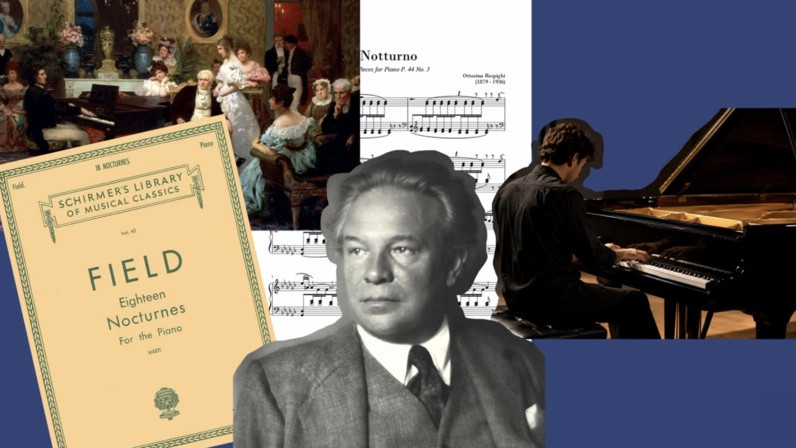
If you love Chopin’s nocturnes, Respighi’s Notturno in G-flat major offers a beautiful next discovery. It has the intimacy you might expect from a piano nocturne, yet something about its movement feels different. The music seems to linger, circling a thought before allowing it to drift away.
Much of that effect comes from the accompaniment. Where a familiar Chopin texture places a singing melody above flowing broken chords, Respighi uses gently rocking pairs of notes. The melody emerges from that repeating pattern, creating an unusual mixture of movement and stillness.
At PianoLIT, we help pianists discover repertoire and understand the music they love. Our four-minute video explores this particular encounter between a familiar genre and a different musical imagination.
What is Respighi’s Notturno?
Notturno is the Italian word for nocturne: a piece associated with the night. Respighi’s Notturno in G-flat major belongs to his Six Pieces for Piano, a collection that reveals a more intimate side of a composer widely known for his orchestral music.
The title gives us a starting point for listening. We might expect quiet reflection, a lyrical melody, and a sense of space. Respighi gives us those qualities, but the way he brings them together makes this nocturne especially intriguing.
Listen closely, and the accompaniment becomes as absorbing as the tune.
Why does Respighi’s nocturne sound different from Chopin?
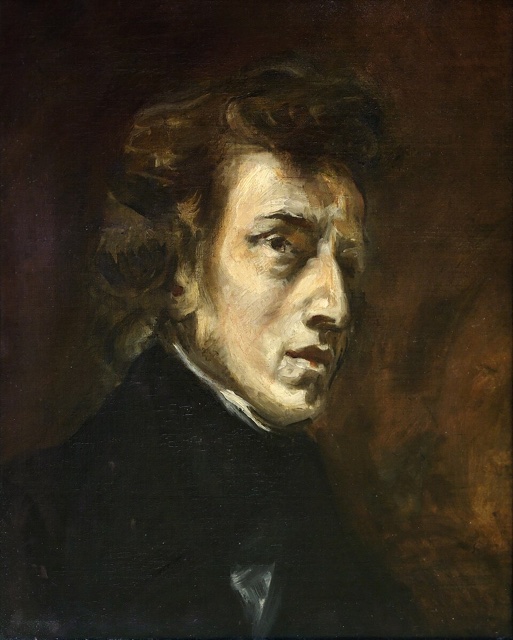
Chopin’s nocturnes contain an enormous variety of textures and moods. Still, one sound has become especially familiar: a vocal melody unfolding over an accompaniment of flowing arpeggios, or broken chords.
That familiar sound is the starting point for the comparison in our video. Respighi changes the relationship between the melody, the accompaniment, and our sense of time.
The accompaniment creates a rocking motion
In Respighi’s opening, pairs of notes alternate in a soft, repeating pattern. There is continuous activity, yet the music feels remarkably settled.
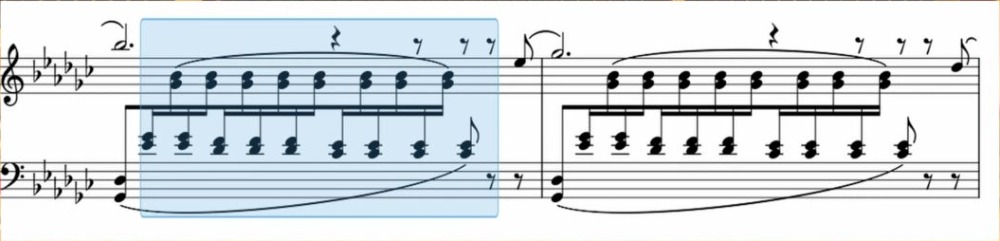
Try listening to the accompaniment alone. Notice how much character it already has before you follow the melody. Its gentle rocking helps establish the atmosphere of the entire opening.
This is one reason Notturno rewards attentive listening: some of its most expressive writing sits in the pattern surrounding the tune.
The melody seems to grow from the texture
As the melody comes into focus, it feels closely connected to that repeating accompaniment. You can follow the tune while remaining aware of the sounds moving around it.
One way to hear this is to shift your attention during a second listening. First, follow the melody as you would a singer. Then listen to the whole texture—the melody, the repeated notes, and the resonance between them.
The same passage can feel surprisingly different depending on where you place your attention.
The phrases have an improvisatory quality
Another striking feature is the impression that the music is being discovered as it unfolds.
A melodic idea appears, expands, gathers decoration, and wanders onward. To the listener, the phrases can resemble the movement of a quiet thought: briefly clear, then opening into an association or memory.
“Improvisatory” describes that listening experience. The expressive possibilities lie in making the written music feel spontaneous, with each phrase growing naturally from the one before it.
A short listening guide to the video
You do not need to read music or know harmony to hear these differences. Start with three details:
-
Around 1:23: Compare the accompaniments. Listen to the familiar nocturne texture, then notice what changes in the Respighi example that follows.
-
Around 1:50: Follow the paired notes. Focus on the soft rocking motion and the atmosphere it creates.
-
Around 2:18: Follow the melodic thought. Notice how the melody develops, becomes decorated, and seems to drift into new ideas.
Then listen to the whole piece from the beginning. Once your ear recognizes the accompaniment, you may find yourself hearing the melody differently.

A piano nocturne to explore beyond Chopin
For listeners searching for piano music beyond Chopin’s nocturnes, Respighi’s Notturno makes a compelling discovery. It keeps the pleasure of a lyrical, reflective piano piece while inviting you to listen more closely to texture and resonance.
The comparison also offers a useful way to explore unfamiliar repertoire. Begin with something you recognize—a genre, a mood, a familiar kind of melody—and listen for what the next composer changes.
On PianoLIT, you can continue with Respighi’s Notturno, where the piece page brings together a performance, Synthesia, and score access. Hearing the music and following its patterns can turn a first impression into a deeper understanding of how the piece works.
Questions about Respighi’s Notturno
Are “Notturno” and “Nocturne” the same thing?
They are Italian and French terms for a night piece. The title suggests a character or atmosphere, while leaving composers considerable freedom in texture, structure, and expression.
Is Respighi’s Notturno easier than Chopin’s nocturnes?
That depends on which Chopin nocturne you are comparing it with. PianoLIT places Respighi’s piece in advanced repertoire. Its calm sound calls for careful control: the melody needs to remain audible while the repeating figures stay soft and even.
What should I listen for first?
Start with the rocking accompaniment. Once you recognize its pattern, follow how the melody emerges and develops within it. That relationship is central to the comparison in our video.
Ready to hear it for yourself? Watch the video, then explore Respighi’s Notturno on PianoLIT.